
*This post may contain affiliate links for which I earn commissions.*
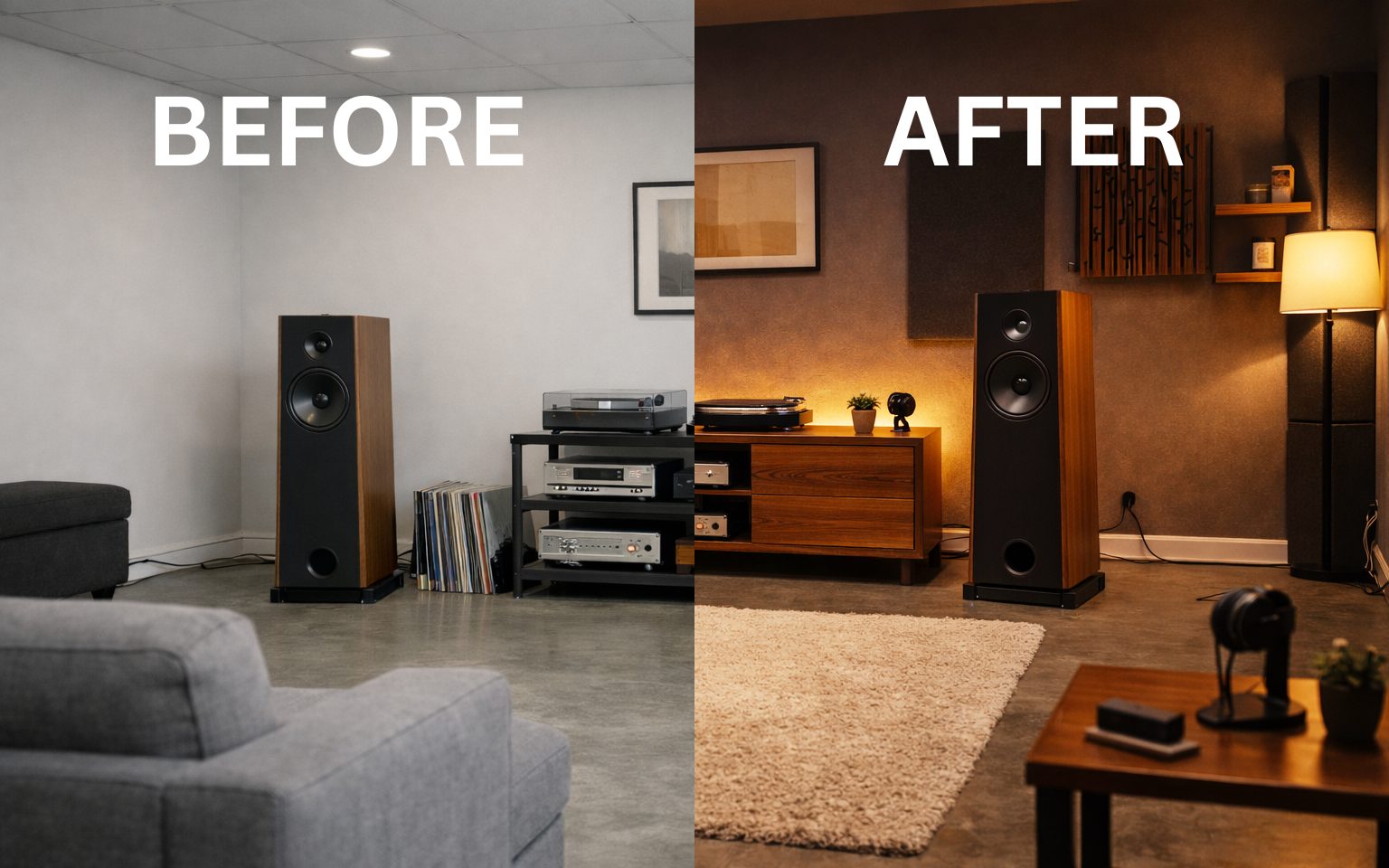
At first, this room felt like a storage space that happened to hold speakers. The light was flat, the walls were bare, and the system looked a little lost against all that empty drywall.
Now, when I step in and press play, the whole room seems to lean into the music. There’s warmth in the lighting, depth in the shadows, and a quiet sense of intention behind every piece. It’s still the same square footage. But the listening experience feels completely different.
This one was all about craft and presence, not flash.
The “Before” Snapshot
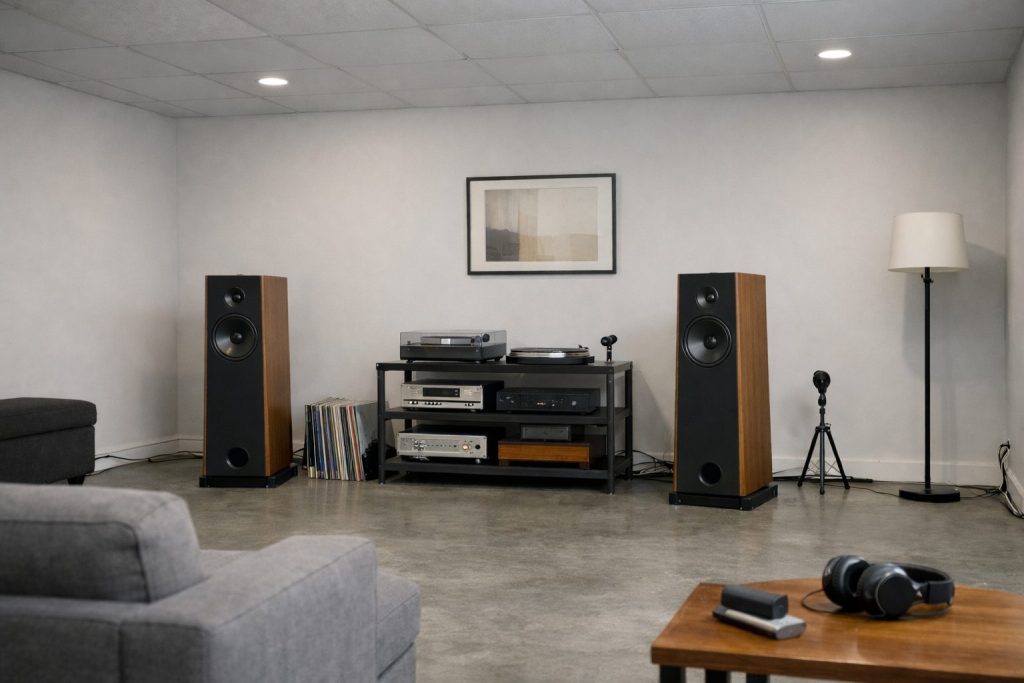
The system itself was ‘serious’. Large floorstanding speakers. Solid amplifier. A respectable turntable.
But the room didn’t support any of it.
The speakers were pushed close to the wall. The rack was overcrowded and visually congested. Cables were visible and tangled. Overhead lighting washed everything in a cold, bluish glare that flattened textures.
There was no rug to anchor the space. No acoustic treatment to help control reflections. When you clapped your hands, you could hear the echo bounce back at you.
It sounded decent. It didn’t feel special.
What I Wanted It to Feel Like
I wanted the room to feel like a personal space built for late-night listening.
A place where you sink into the chair and forget the gear because the music has presence. Where the light is soft and directional, not overhead and clinical. Where every surface adds a little warmth instead of stealing it.
For high end audio enthusiasts, the goal isn’t just accuracy. It’s emotional connection. That’s what we were shaping here.
The Changes That Made the Difference
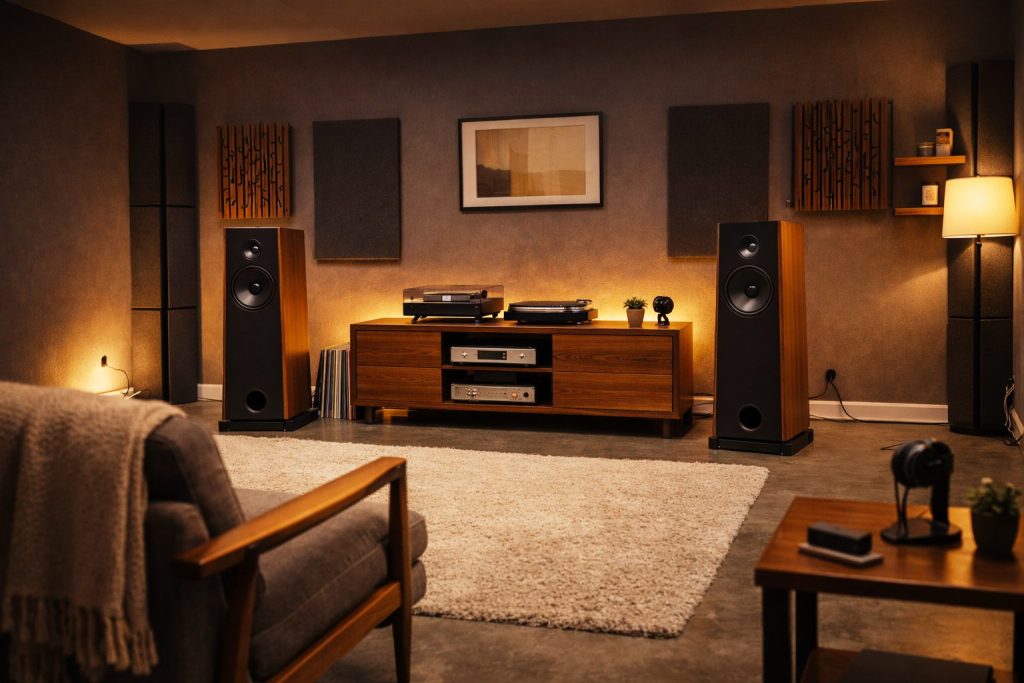
- Pulled the speakers into the room
Giving them breathing room improved imaging, which means instruments feel placed in space instead of smeared together. Visually, it created symmetry and intention. - Added a thick wool area rug
Wool absorbs high frequency reflections and softens foot noise. The texture also grounded the entire layout, giving the system a visual anchor. - Installed acoustic panels at first reflection points
These are the spots where sound first bounces off walls toward your ears. Treating them tightened clarity and reduced harshness. On the wall, they added depth and subtle structure. - Swapped the open metal rack for a low walnut media console
Wood introduces warmth both sonically and visually. The lower profile also made the speakers feel taller and more commanding. - Introduced layered lighting
A pair of dimmable floor lamps and warm LED strip lighting behind the console replaced the harsh ceiling fixture. The room gained shadow and atmosphere. - Managed cables properly
Clean cable routing behind the console removed visual distraction. It sounds small, but the calm it creates matters. - Repositioned the listening chair
Moving it into the sweet spot, roughly forming an equilateral triangle with the speakers, brought the soundstage into focus. Suddenly vocals had presence right in front of you.
One small adjustment led to another. It always does.
Products That Made the Biggest Difference
Here are the product types that quietly carried this transformation. None of them are flashy. All of them matter.
- Floorstanding speakers
Look for solid cabinet construction, internal bracing, and stable plinth bases. Their scale defines the room visually and sets the tonal character of the listening experience. - Integrated amplifier
Choose one with clean power delivery and enough headroom for your speakers. A well-built chassis with brushed metal or matte finish also contributes to a refined look. - Turntable with isolation feet
A heavy plinth and vibration control keep playback stable. Visually, a low, minimalist design keeps the surface from feeling cluttered. - Low media console in real wood veneer or solid wood
Ventilation slots are important for heat management. The natural grain adds warmth and craft that painted furniture just can’t replicate. - Thick wool area rug
Aim for dense pile and natural fibers. It softens reflections and makes the system feel grounded in the space. - Acoustic panels or diffusers
Fabric-wrapped panels in neutral tones blend into walls while controlling reflections. Diffusers add texture without making the room feel padded. - Dimmable floor lamps with warm bulbs
Look for adjustable brightness and warm color temperature around 2700K. This shifts the mood from clinical to intimate. - Dedicated audio rack or isolation platform
If separate from the console, choose one with sturdy shelves and vibration control. It keeps components stable and visually organized. - Cable management sleeves and clips
Simple fabric sleeves or under-console trays hide visual noise. The room feels calmer instantly.
Each of these pieces supports both sound and atmosphere. That’s the sweet spot.
Tiny Tweaks, Big Impact
- Centered the console precisely between the speakers for symmetry.
- Hung a large framed print above the system to soften the wall.
- Added a small plant in a matte ceramic pot for organic contrast.
- Switched to darker outlet covers so they disappeared into the wall.
- Placed a textured throw over the listening chair for comfort and warmth.
- Adjusted toe-in of the speakers by a few degrees to refine imaging.
I did spend an extra twenty minutes adjusting lamp angles. No one will notice consciously, but everyone feels it.
The Simple Maintenance Plan
- Dust components weekly with a soft microfiber cloth to keep finishes rich.
- Check speaker positioning every few months if the rug shifts.
- Vacuum the rug regularly to preserve its texture and acoustic benefit.
- Inspect cable connections twice a year to ensure everything stays snug.
- Keep lighting levels consistent for evening listening so the mood remains intentional.
A music room doesn’t need to be extravagant. It just needs care.
Small tip: pull your speakers forward by even six inches tonight and sit back down. Listen for the difference in presence.