
*This post may contain affiliate links for which I earn commissions.*
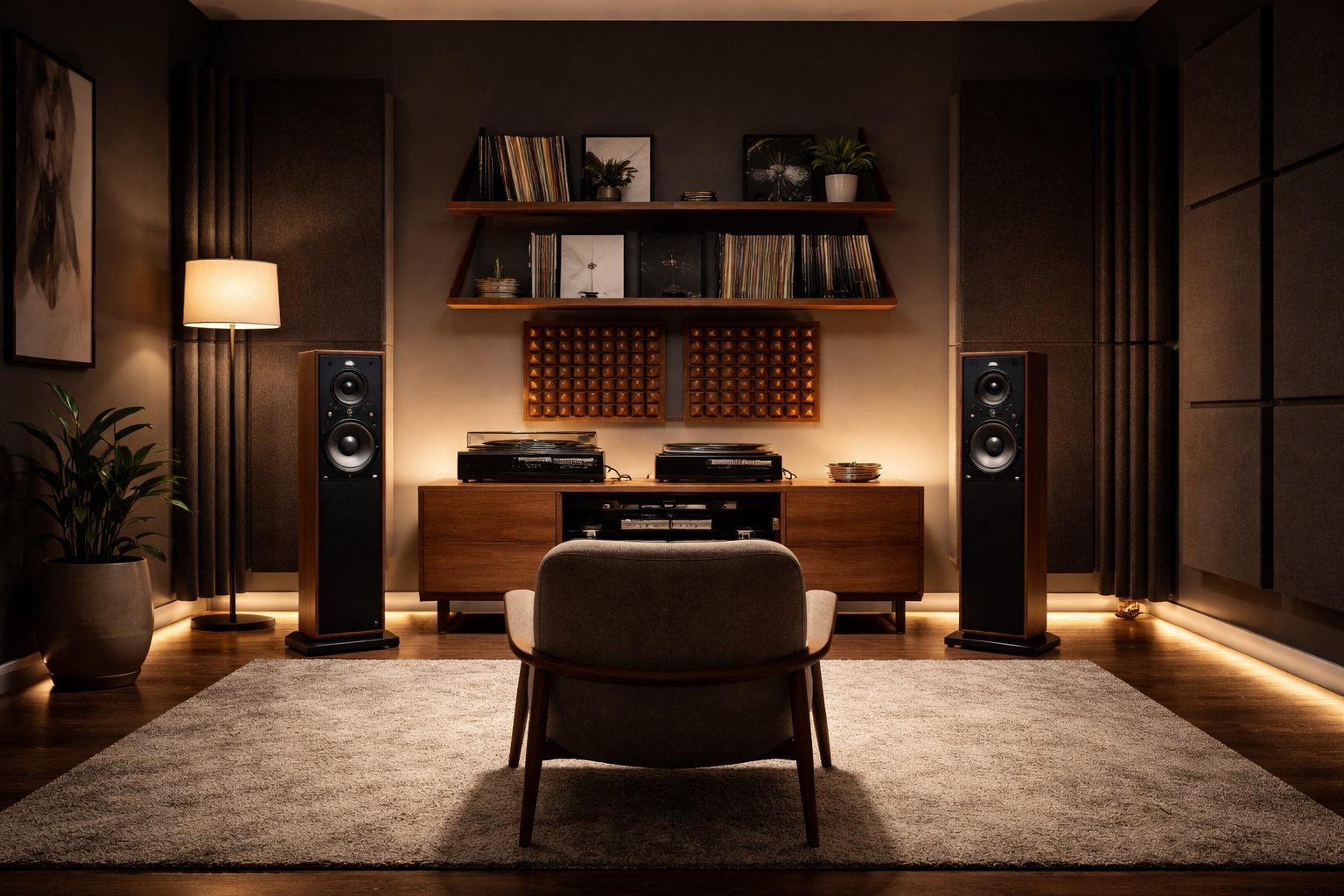
A record settles onto the platter, the stylus drops, and the room goes quiet for a breath. The lights are low, just enough glow along the wall to shape the space. When the music begins, the room doesn’t simply play sound. It holds it, the way a good cinema holds a film.
That cinematic feeling isn’t about turning a music room into a theater. It’s about atmosphere. Light, depth, and a little bit of drama working together so the listening experience feels immersive the moment you sit down.
The Visual Theme
A cinematic music room leans into contrast and presence. Darker walls help the room fade away, letting the music take center stage. Charcoal, deep navy, or warm walnut tones often create the right foundation.
Lighting becomes the quiet director here. Instead of a single bright overhead fixture, the room relies on layers of soft light. Wall grazing lights that skim across acoustic panels, a warm glow behind the equipment rack, or a floor lamp that pools light around the listening chair.
Textures matter just as much as color. A thick wool rug absorbs a bit of echo while adding visual weight. Fabric panels soften the walls. Wood shelves or diffusers break up large surfaces and give the room structure.
The goal isn’t darkness for its own sake. It’s intimacy. When the room fades just enough, the soundstage opens up and the music feels almost three dimensional.
Style Sparks
- Dark wall paint behind the speakers
A deep charcoal or matte navy wall reduces visual distraction and naturally frames the system. - Hidden LED backlighting behind the equipment rack
A warm strip light creates a gentle halo that outlines the gear without drawing attention away from the music. - Thick area rug in the listening zone
Look for dense wool or wool blend rugs. They soften reflections and visually anchor the seating. - Floating wall shelves with minimal decor
A few records, a small sculpture, or a plant. Cinematic rooms breathe when surfaces aren’t crowded. - Vertical acoustic panels that resemble wall art
Tall fabric panels in darker tones absorb reflections while adding texture to the room. - A dedicated listening chair placed on axis with the speakers
The classic “sweet spot.” Even a slight repositioning can make the soundstage snap into focus. - Low media console that keeps gear close to the ground
Lower furniture keeps the visual horizon calm and lets the speakers feel taller and more dramatic. - Soft lighting behind acoustic panels
This trick creates depth. Light glows around the edges and makes the wall feel layered. - Record storage integrated into the wall
Rows of albums add color and personality without clutter. - A single statement floor lamp near the listening chair
Choose warm light and a fabric shade so the glow feels relaxed rather than clinical. - Bass traps disguised in corner columns
They quietly improve low frequency control while keeping the room visually balanced. - A darker ceiling tone or acoustic tiles overhead
When the ceiling disappears slightly, the room instantly feels more intimate.
Shop the Mood (Quick Picks)
Sometimes a few carefully chosen pieces help establish the mood quickly.
A warm LED bias lighting strip placed behind equipment or shelving adds subtle glow without brightening the room too much.
A dense wool listening room rug helps tame reflections while visually grounding the seating area.
A fabric-wrapped acoustic wall panel set brings both sound absorption and a textured backdrop.
Tiny Changes, Big Impact
- Dim the lighting slightly before every listening session. It sets the tone immediately.
- Pull the listening chair a little farther into the room. Cinematic rooms love breathing space.
- Hide cable clutter with simple sleeves or channels.
- Angle speakers carefully so their front edges frame the seating position.
- Keep equipment surfaces clean and minimal. Less visual noise helps the room feel calmer.
- Add a small plant or wood accent for warmth against darker walls.
- Let the side walls stay relatively quiet visually so the front wall becomes the focus.
Pieces That Pull It Together
Acoustic wall panels
Look for fabric wrapped panels with dense absorption cores around 2 to 4 inches thick. They reduce early reflections and add visual texture to the walls.
Corner bass traps
Tall triangular or column style traps help control low frequencies. In darker fabric finishes they blend into corners and maintain the cinematic mood.
Warm LED bias lighting strips
Choose dimmable strips with a warm color temperature around 2700K. They create soft halos behind furniture or panels without overpowering the room.
Wool or wool blend area rug
A thick rug around 8×10 or larger helps absorb reflections from the floor and visually anchors the listening area.
Low media console or audio rack
Look for solid wood or metal frames with open airflow. Lower height furniture keeps sight lines calm and allows speakers to dominate the front wall.
Dedicated listening chair
A supportive lounge chair with fabric upholstery often works well. Comfort matters because cinematic listening sessions tend to run longer than expected.
Record storage shelving
Cube shelves or low vinyl cabinets keep albums organized while adding color and personality to the room.
Statement floor lamp with warm bulb
A lamp with a fabric or linen shade spreads light softly and keeps glare away from equipment.
Cable management sleeves or channels
Simple but effective. Cleaning up visible cables instantly makes the room feel more intentional.
A cinematic room doesn’t need a complete redesign. Often it’s just a few lighting shifts, a deeper wall color, or a rug that pulls the space together.
Try one small change tonight. Dim the lights a little more than usual, settle into the listening chair, and see how the room feels when the music starts.
Small tip: if you want a cinematic mood quickly, start by lowering the lighting and darkening the wall behind your speakers. The room will relax instantly.