
*This post may contain affiliate links for which I earn commissions.*
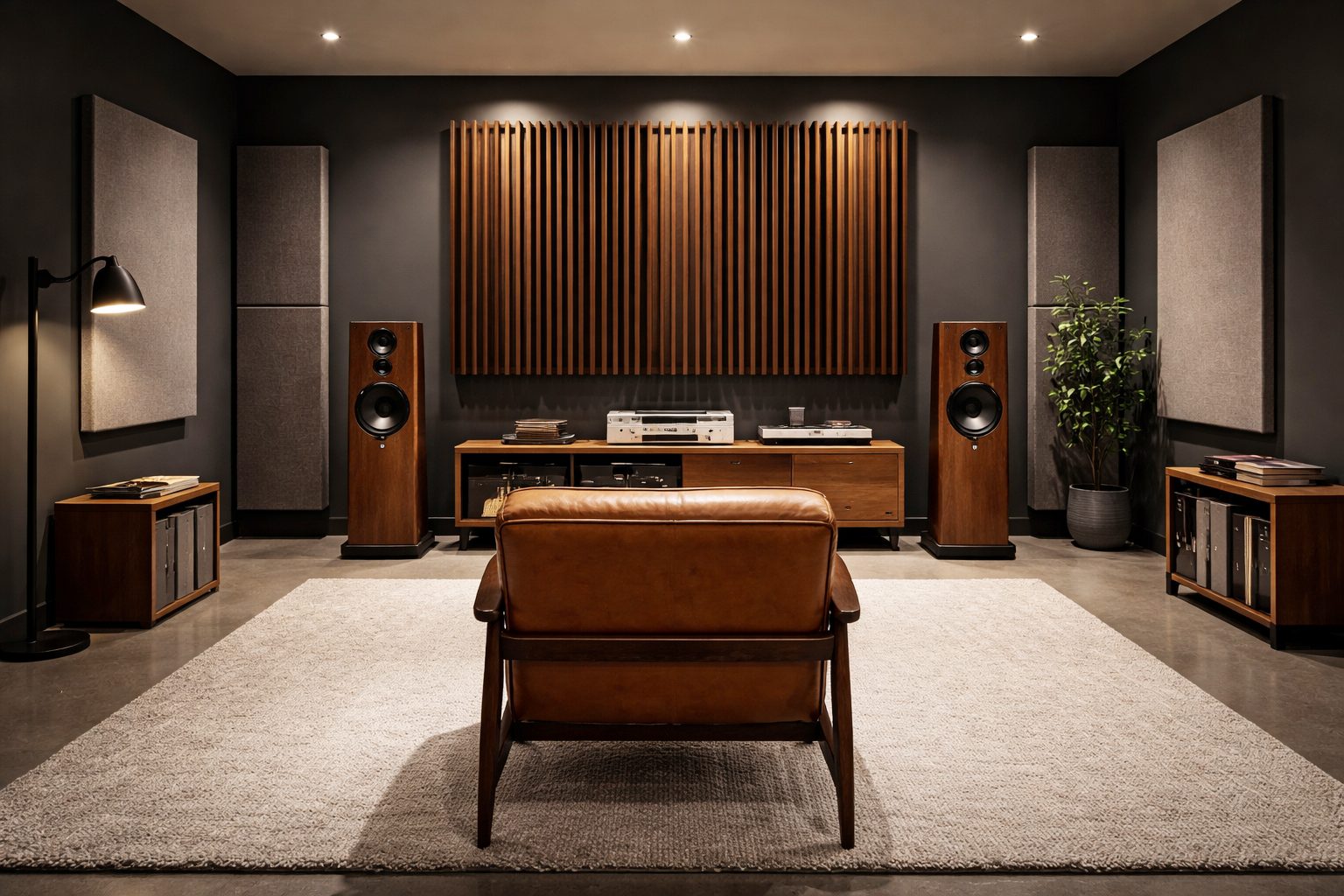
The lights are low, just a soft amber glow along the back wall. The air downstairs feels cooler, quieter. When the needle drops, the bass settles into the room like it belongs there, and the walls don’t echo back at you. They hold the sound gently.
That’s the feeling we’re after. A basement that doesn’t feel like an afterthought, but like a carefully crafted personal space designed for presence and depth.
This kind of room isn’t flashy. It’s grounded. It’s about warmth, texture, and giving your listening experience the respect it deserves.
The Building Blocks of This Look
• Deep, moody wall color in charcoal, espresso brown, or a muted navy. Dark paint absorbs light visually and makes the room feel intimate, which helps the system feel more focused and intentional.
• Layered, low lighting with warm temperature bulbs around 2700K. Think shaded floor lamps, dimmable wall sconces, and a soft LED strip behind equipment. The glow should feel like late evening, even at noon.
• Substantial seating in leather or tightly woven fabric. A wide armchair with weight and texture anchors the room and encourages longer sessions.
• Real wood surfaces such as walnut, oak, or stained birch. Wood adds organic warmth that balances the precision of high end audio gear.
• Visible acoustic treatment that feels like part of the design. Fabric wrapped panels in deep gray or textured earth tones help control reflections. Reflection means the sound bouncing off walls and arriving at your ears slightly delayed.
• A defined equipment wall with clean cable management. The system should feel composed, not crowded.
• A grounded floor layer like a thick wool or wool blend rug. It softens footfall and gently tames brightness in the room.
Shop the Look
- High end floorstanding speakers
Look for real wood veneer cabinets in walnut or satin black, ideally with a narrow front baffle. The height and physical presence create visual authority and deliver a full range listening experience. - Solid wood audio rack
Choose a low, open rack in hardwood with thick shelves and vibration isolating feet. It keeps components stable and visually grounded. - Integrated amplifier or separate preamp and power amp
Look for a brushed aluminum or matte black finish with understated controls. Clean lines support the sophisticated feel without stealing attention. - Turntable with a substantial plinth
A heavy base in wood or composite material helps reduce vibration. The tactile ritual of placing a record adds craft to the room. - Acoustic wall panels
Fabric wrapped panels in neutral, darker tones. Panels around 2 to 4 inches thick will help manage early reflections and tighten the soundstage. - Bass traps for corners
Tall, fabric covered corner traps in matching tones. Basements can exaggerate low frequencies, so this helps keep bass controlled rather than boomy. - Full grain leather lounge chair
A wide seat with a slightly reclined back and sturdy arms. Comfort matters because long listening sessions are part of the point. - Solid wood side table
Small but weighty, large enough for a record sleeve and a glass of water. Natural grain adds warmth. - Large wool area rug
At least 8 by 10 feet if the room allows. Thick pile adds softness underfoot and subtle acoustic benefit. - Dimmable floor lamp with fabric shade
A warm bulb and linen or cotton shade will diffuse light so it feels gentle, not harsh. - Cable management box or braided cable sleeves
Neutral tones that blend into the background. Clean wiring keeps the room calm. - Low media console or record storage cabinet
Closed storage in wood veneer keeps visual clutter down while keeping vinyl within reach.
A Few Helpful Finds
A record cleaning brush with natural fibers keeps surfaces dust free and feels good in the hand.
Isolation pads for speakers or components can help tighten bass response, especially on concrete basement floors.
A dimmer switch kit lets you control mood instantly without rewiring the whole room.
Smart Substitutions
• Instead of custom acoustic panels, look for thick framed canvas art with acoustic backing.
• Swap full grain leather for high quality faux leather or tightly woven performance fabric in a deep tone.
• Use a well built IKEA wood shelf and reinforce it for stability rather than investing immediately in a premium rack.
• If floorstanders are out of reach, choose standmount speakers with heavy, sand fillable stands.
• Layer smaller rugs if a large wool rug feels expensive. Texture matters more than brand.
How to Pull It Off
- Paint the walls first. The darker envelope changes everything and sets the mood.
- Position your speakers and chair before bringing in smaller furniture. Dial in placement so the listening triangle feels natural.
- Add the rug under both the speakers and the listening position to unify the layout.
- Install acoustic panels at first reflection points. That usually means side walls at ear height when seated.
- Layer lighting last. Turn everything on at night and adjust until the glow feels calm and intentional. I usually tweak this part more than I expect to.
The Little Details That Sell the Look
• Keep a small stack of records on display with covers facing forward.
• Choose matte finishes over glossy ones to reduce visual glare.
• Add one textured throw blanket in a deep tone for warmth.
• Use felt pads under furniture to protect floors and reduce vibration.
• Keep the ceiling simple. In basements, a dark painted ceiling can visually disappear.
• Store remotes in a small wood tray so surfaces stay clean.
• Let at least one wall breathe without decor. Negative space adds presence.
A sophisticated basement music lounge doesn’t demand attention. It invites you in quietly and rewards patience.
If you have a basement corner that’s underused, start by painting one wall in a deep tone this weekend and sit with it for a few evenings. Notice how the sound and the mood shift together.
Small tip: dim the lights slightly lower than feels natural at first. Your ears will thank you.