
*This post may contain affiliate links for which I earn commissions.*
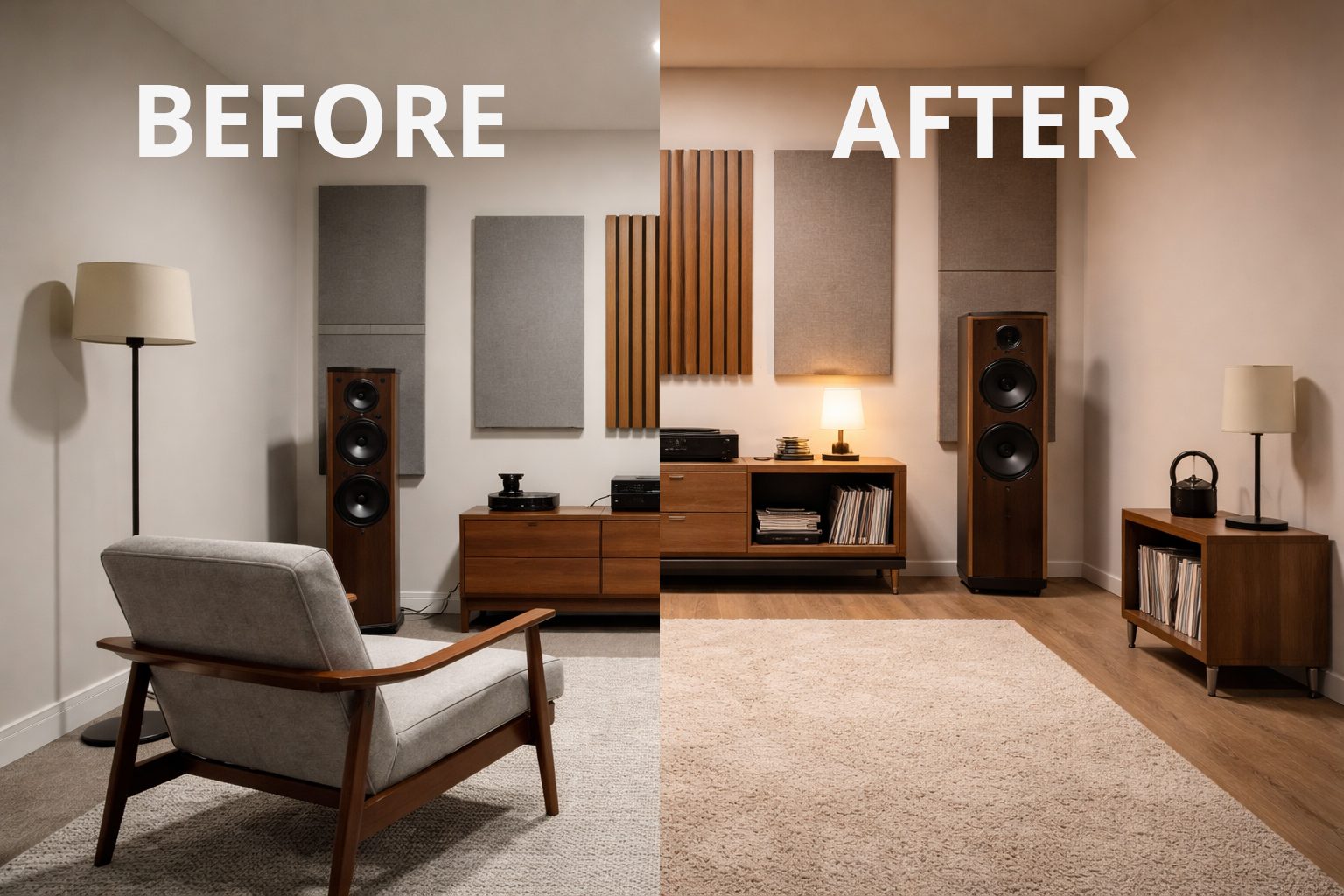
I used to sit down for a late-night listening session and feel like something was missing, even when the music itself was right. The room looked… quiet in the wrong way. Not calm, not intentional. Just flat.
A single overhead light washed everything out. The speakers felt disconnected from the space, and the textures I’d chosen so carefully barely showed up. It worked, technically. But it didn’t feel like a place I wanted to stay in.
The “Before” Snapshot
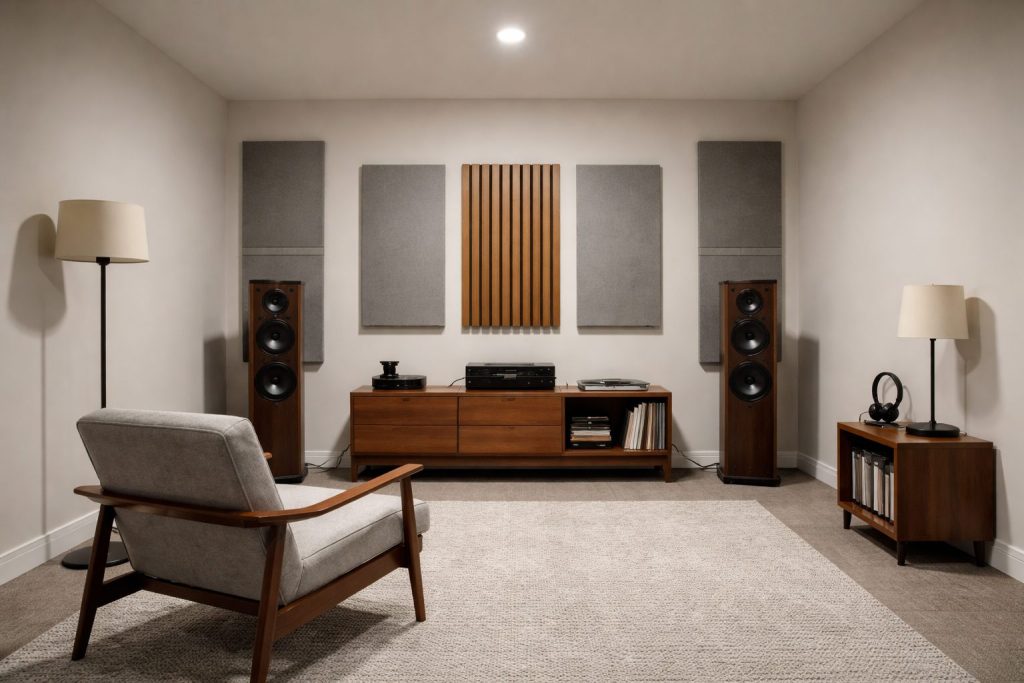
Dull is the simplest way to put it.
The room had light, but no depth. One central source, slightly harsh, casting faint shadows in all the wrong places. The walls looked colder than they were, and the listening chair felt like it was just… sitting there, not anchored into anything.
At night especially, the whole space lost its presence.
What I Wanted It to Feel Like
I wasn’t chasing brightness. I wanted warmth.
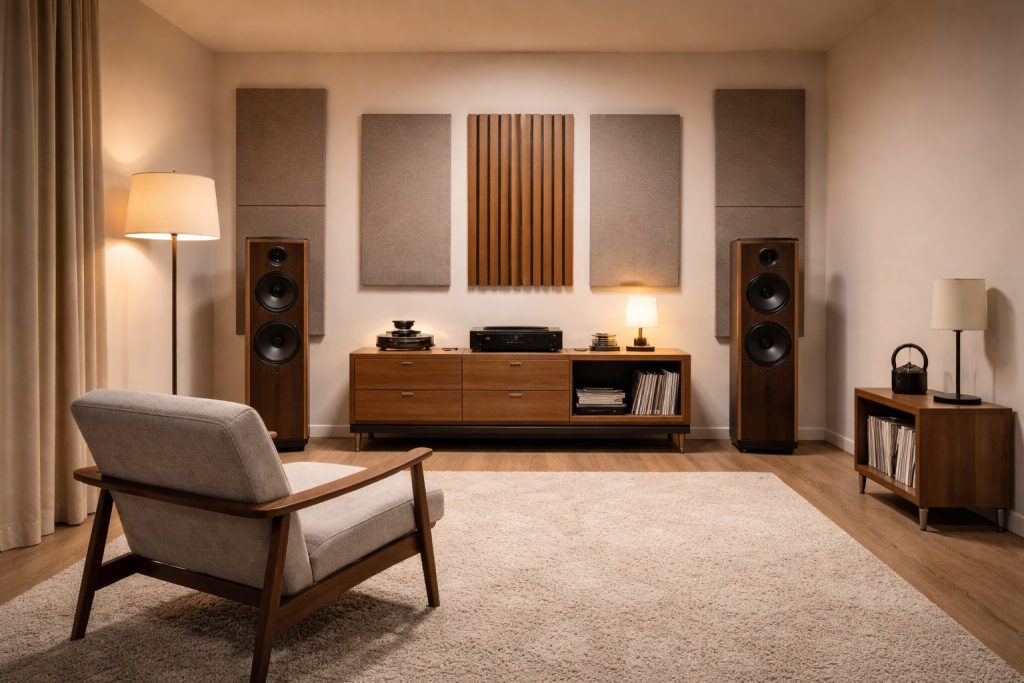
Not just in color temperature, but in how the room held light. A sense that the space wraps around you when you sit down. Softer edges. Gentle contrast. A kind of quiet luxury where nothing feels loud, but everything feels considered.
I wanted the lighting to support the listening experience, not compete with it.
What I Did (In Order)
- Turned off the overhead light completely
This was the first shift, and honestly the most revealing. Once the main ceiling light was gone, I could actually see how empty the lighting felt. It forced me to rebuild from scratch, which helped. - Introduced a warm floor lamp near the listening chair
I placed it slightly behind and to the side, so it grazes the shoulder of the chair rather than hitting it directly. This created a soft halo effect that immediately made the seat feel like a place, not just an object. - Added low, indirect lighting behind the media console
A simple LED strip, but placed carefully so the glow reflects off the wall rather than shining outward. This gave the speakers a subtle backdrop and added depth without drawing attention to the source. - Layered a small table lamp on the console
This one surprised me. A low, warm lamp between components softened the hard lines of metal and glass. It also gave the center of the setup a gentle focal point. - Adjusted color temperature across all lights
Everything now sits in a warm range around 2700K. Before, I had a mix of cool and neutral tones, which made the room feel inconsistent. Matching them brought a sense of cohesion I didn’t expect. - Used dimmers to control intensity
This is where things started to feel refined. I don’t need full brightness most of the time. Being able to lower the light just a bit changes the entire mood of a listening session. - Let shadows exist instead of eliminating them
I stopped trying to “light everything.” Leaving some areas slightly darker gave the room contrast and made the lit areas feel more intentional.
The Helpful Tools + Pieces
Foundation (building the light itself)
- Warm LED bulbs (2700K range)
Look for high CRI if possible. It helps wood, fabric, and skin tones feel more natural. - Dimmable LED strips
Soft, indirect glow works best when the light source isn’t visible. Adhesive backing helps with clean placement behind consoles or shelves. - Plug-in dimmer switches
An easy upgrade if your wiring is fixed. Gives you control without needing to change fixtures.
Function (shaping how the light behaves)
- Floor lamps with fabric shades
Linen or cotton shades diffuse light gently, avoiding harsh edges. - Compact table lamps
Ideal for media consoles. Look for a low profile so they don’t block components or feel bulky. - Directional accent lights
Useful for grazing walls or highlighting textures like acoustic panels or wood slats.
Finishing (bringing warmth and texture forward)
- Warm-toned lamp shades
Off-white, beige, or even soft amber tones can shift the entire feel of the light. - Cable management clips or sleeves
Small detail, but keeping wires hidden helps the lighting feel clean and intentional. - Reflective surfaces in moderation
Brushed metal or subtle glass elements can catch light softly and add dimension without glare.
Tiny Tweaks, Big Impact
- Lower your brightest light by just one step on the dimmer
- Angle one light so it hits a wall instead of the room
- Keep one corner slightly darker for contrast
- Swap out one cool bulb for a warm one and notice the shift
- Sit in your listening chair and adjust from that perspective, not while standing
Your Next Move
Start with one light.
Not a full overhaul, not a shopping list. Just turn off your overhead light tonight and place a single warm lamp near your listening spot. Sit down, play something you love, and notice how the room responds.
From there, it becomes a process of adding, adjusting, and listening again.
Small tip: Light the space the way you want the music to feel, not just the way you want the room to look.