
*This post may contain affiliate links for which I earn commissions.*
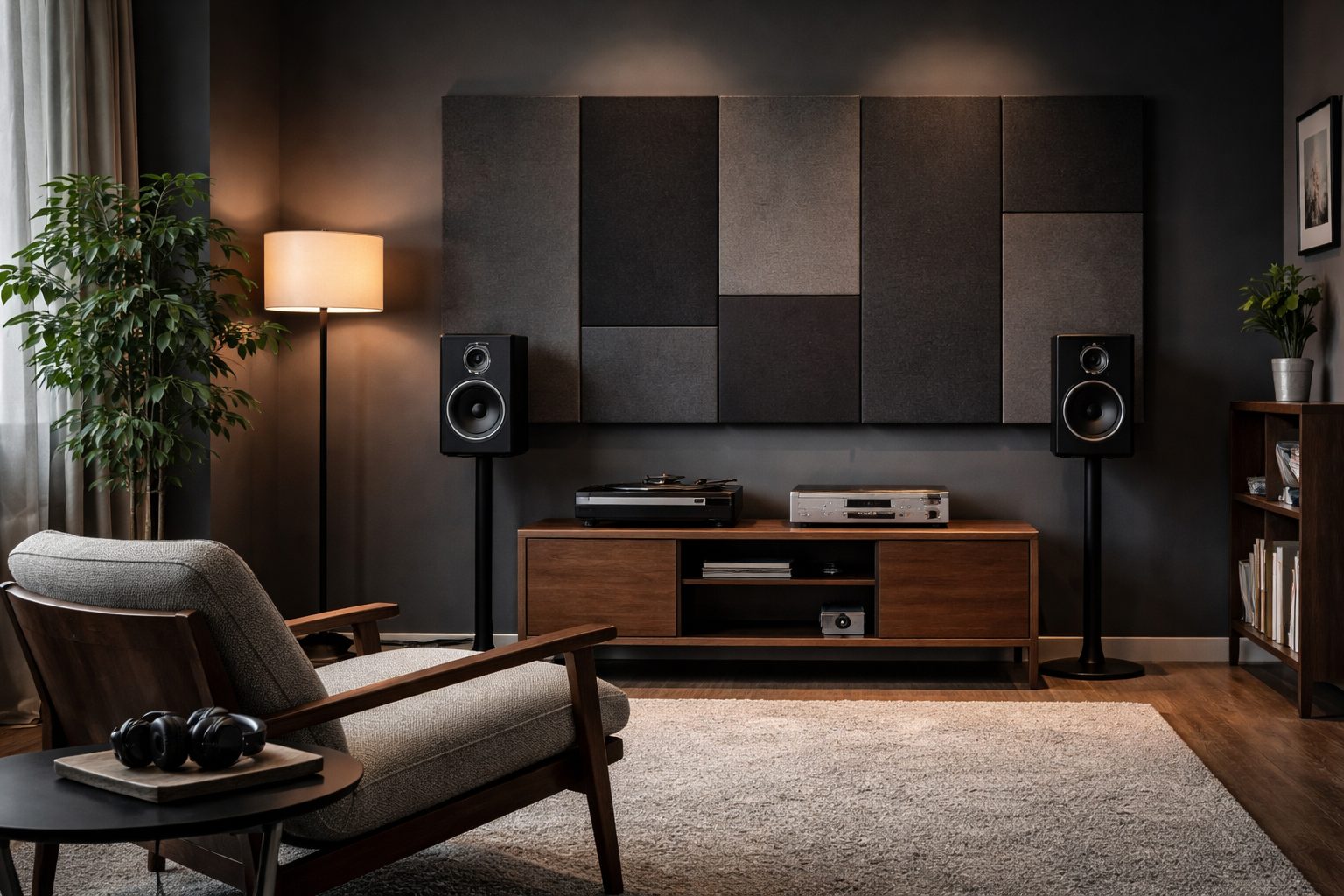
You don’t need expensive panels or a designer’s eye to make them feel intentional. A few small details can turn plain acoustic panels into something that quietly anchors the whole room. Even something as simple as a warm linen fabric instead of flat black can change how the space feels the moment you sit down.
The Style Notes
What I keep coming back to is balance. Acoustic panels are practical by nature, but they don’t have to look like studio gear dropped into a living space. Soft, tactile fabrics paired with warm wood tones tend to settle the room visually.
I like to think in layers. A charcoal wall behind a light fabric panel. A walnut slat detail beside something matte and neutral. Even the light matters. Panels catch shadows differently than painted walls, and that subtle depth adds presence without asking for attention.
It’s not about making panels stand out loudly. It’s about letting them belong.
Visual Ideas to Steal
- Wrap panels in textured fabric
A slightly coarse linen or wool blend adds depth. When light grazes across it, the surface feels alive instead of flat. - Frame them like artwork
A slim oak or walnut frame gives structure and makes even a simple panel feel considered. - Create a soft grid layout
Instead of one large panel, try four smaller ones with even spacing. It brings rhythm to the wall. - Mix panel sizes intentionally
A tall rectangle beside two smaller squares can feel more relaxed than perfect symmetry. - Use tone-on-tone colors
Think warm beige on a cream wall or deep grey on charcoal. It keeps things calm but layered. - Add vertical wood slats nearby
Panels next to slatted wood create contrast between soft and rigid textures. - Let lighting do some of the work
A warm lamp placed slightly off to the side will cast gentle shadows across the panel surface. - Float them off the wall slightly
A small gap behind the panel creates a shadow line that adds quiet depth. - Align with your speaker height
When panels visually line up with your speakers, the whole front wall feels more intentional. - Pair with soft furnishings
A wool rug or fabric chair nearby echoes the panel texture and ties the room together.
A Few Helpful Picks
If you’re keeping things budget-friendly, a few simple pieces can help a lot without overthinking it:
- Fabric-wrapped acoustic panels in neutral tones
- Stick-on wood slat strips for subtle texture
- Warm LED floor lamps with diffused light
- Simple wooden frames or trim pieces for DIY panel borders
Tiny Changes, Big Impact
- Check that panel spacing feels even when you step back
- Match panel fabric tone with at least one other element in the room
- Soften nearby surfaces with a rug or curtain
- Keep lighting warm, not harsh
- Let one wall be the focus instead of treating every wall the same
Pieces That Pull It Together
- Fabric-wrapped acoustic panels
Look for dense cores with linen or polyester fabric finishes. They absorb sound while adding softness to the wall. - Wood trim or framing strips
Thin oak or walnut strips work well. They give panels a finished edge and a bit of visual weight. - Adhesive wood slat panels
Lightweight slats with a natural veneer. They introduce vertical lines and contrast against soft panel surfaces. - Warm LED floor or table lamps
Choose diffused shades and warm color temperatures. They help panels catch light gently instead of looking flat. - Wool or thick area rugs
Go for hand-tufted or flatweave wool. They echo the softness of panels and ground the listening space. - Neutral wall paint (matte finish)
Soft matte paints in beige, grey, or off-white reduce glare and let panel textures stand out. - Floating panel mounts or spacers
Small mounting hardware that creates a gap behind panels. This adds a shadow line and a bit of visual depth. - Minimal wall art (optional pairing)
Simple prints or line art in similar tones. They help panels feel like part of a composition rather than standalone pieces.
Ending
- Place one panel where your ears naturally focus when seated
- Add a warm light and see how the texture changes
- Step back and adjust spacing until it feels calm
Small tip: if a panel looks too flat, it usually just needs better light, not a replacement.